
Last updated November 4, 2026
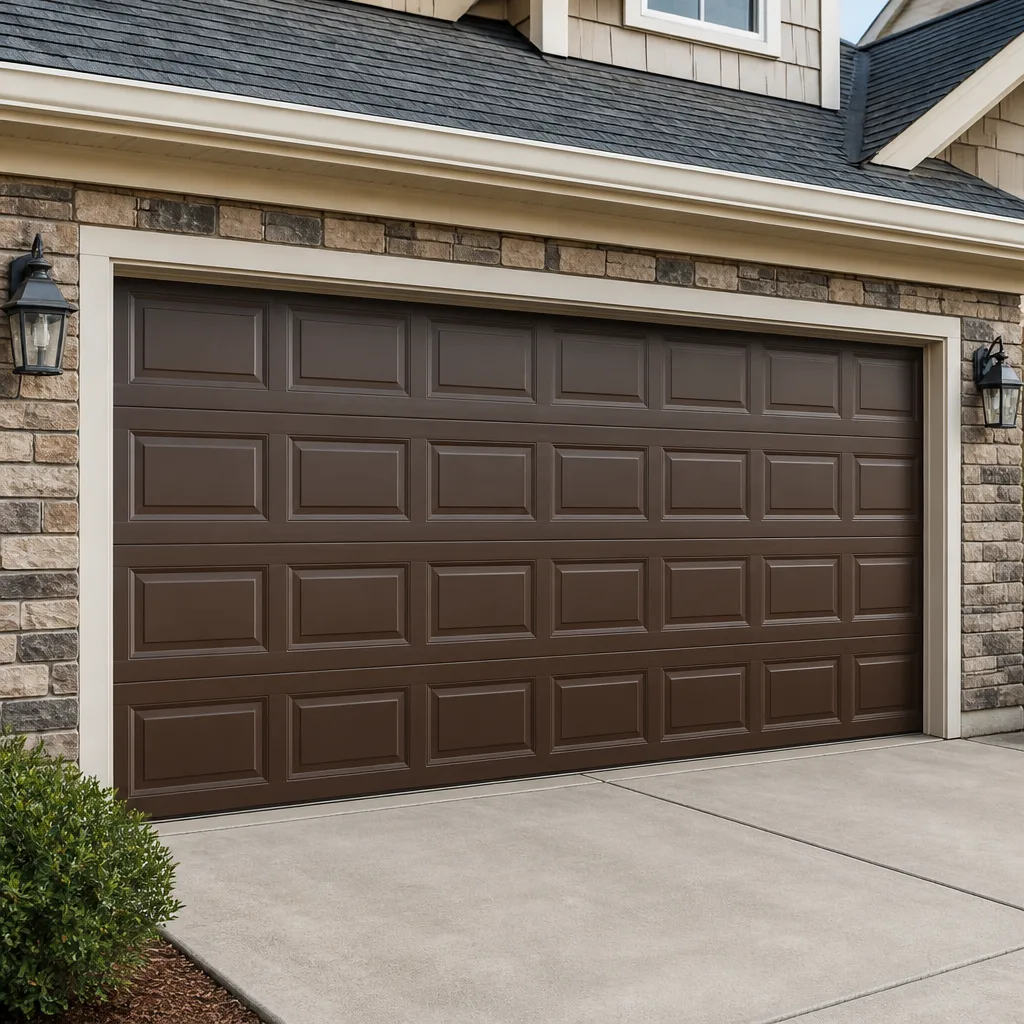 Raised-panel steel
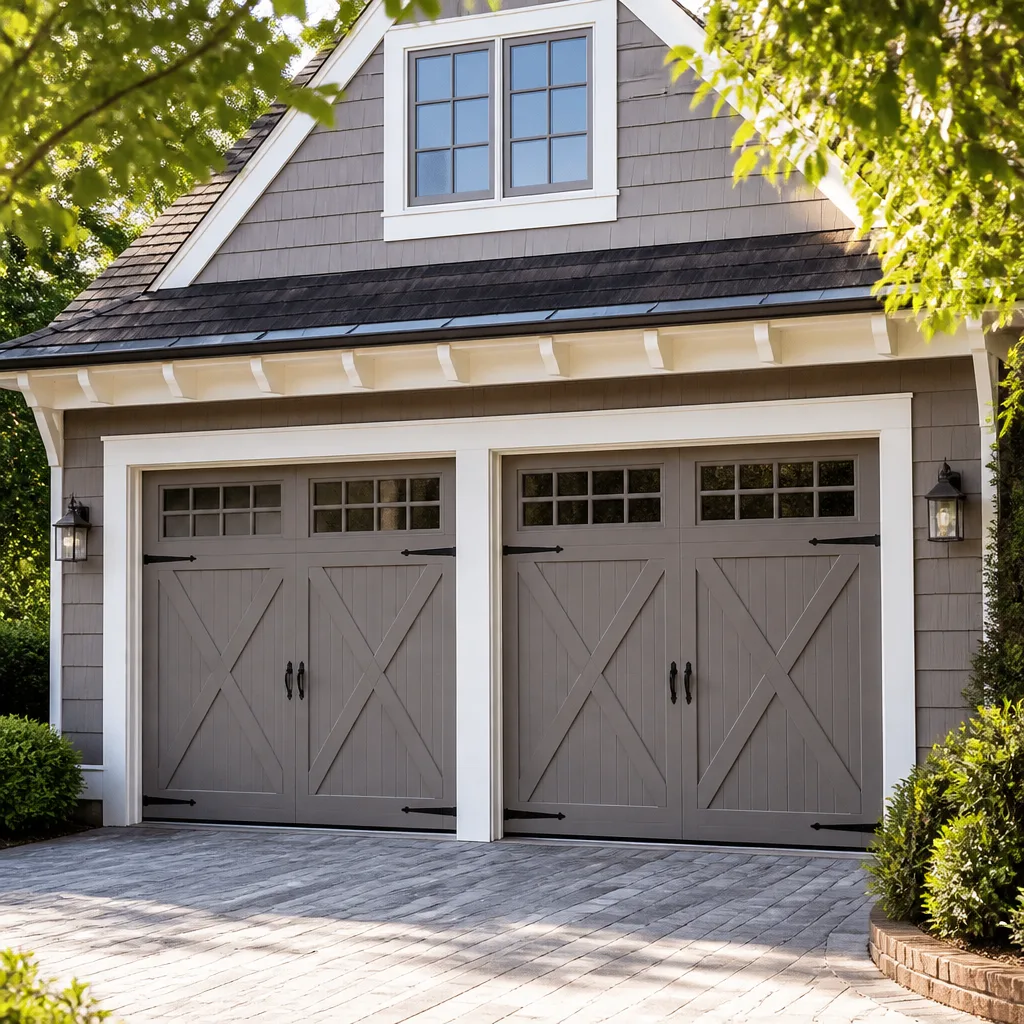 Carriage house
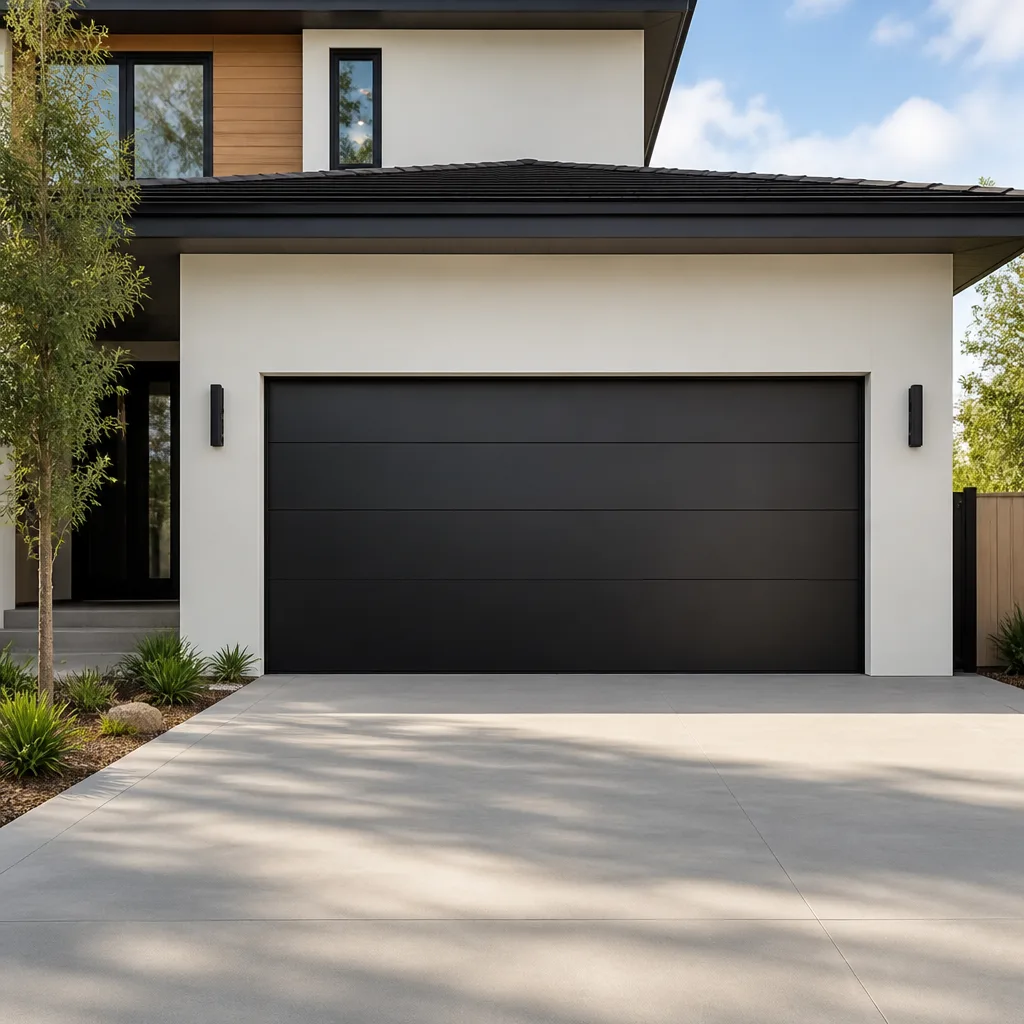 Modern flush
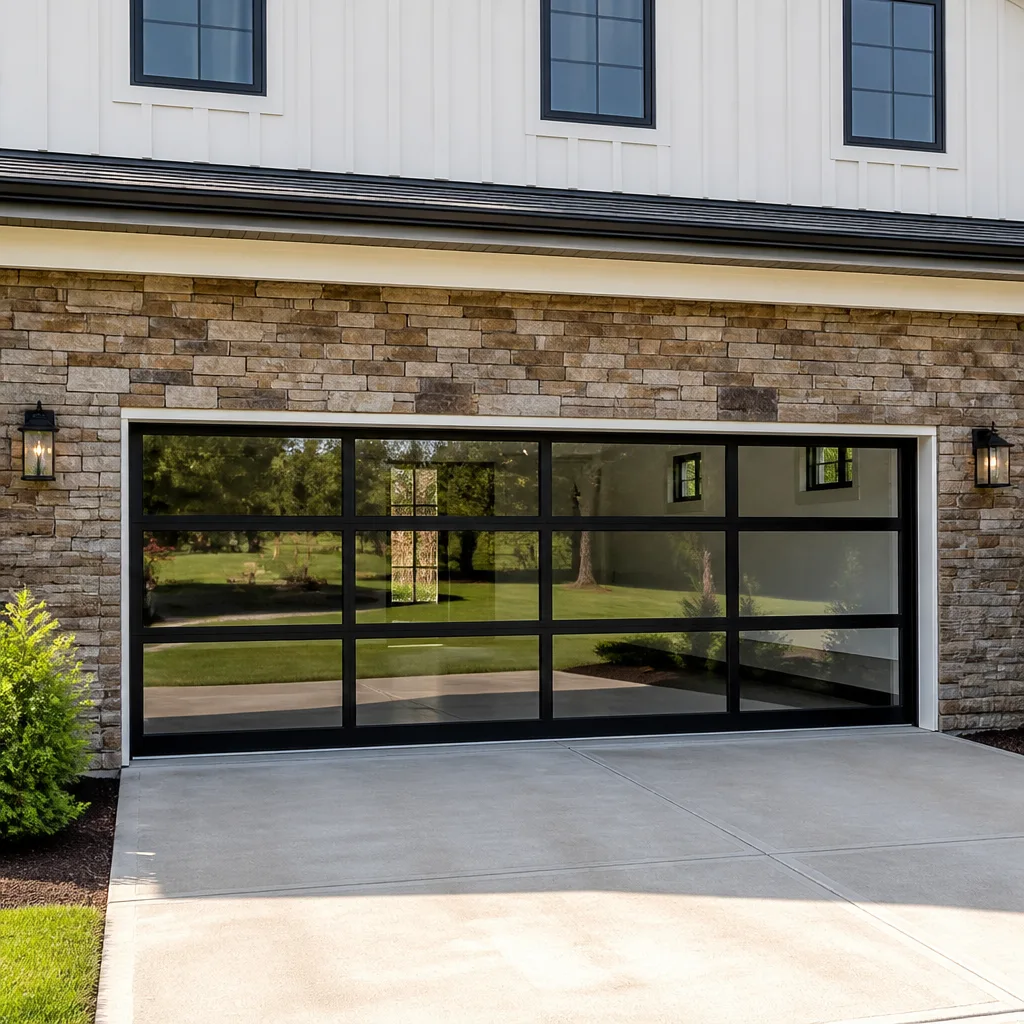 Full-view glass
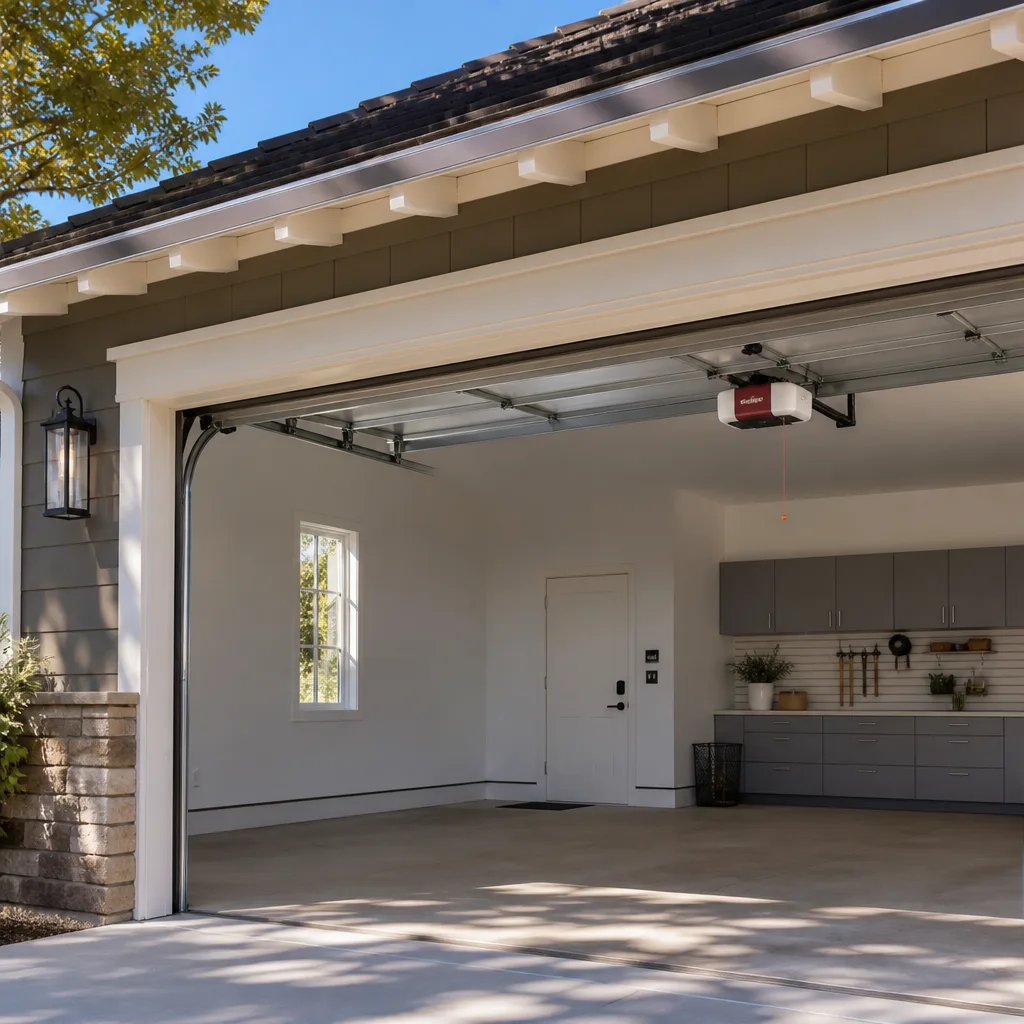 LiftMaster openers
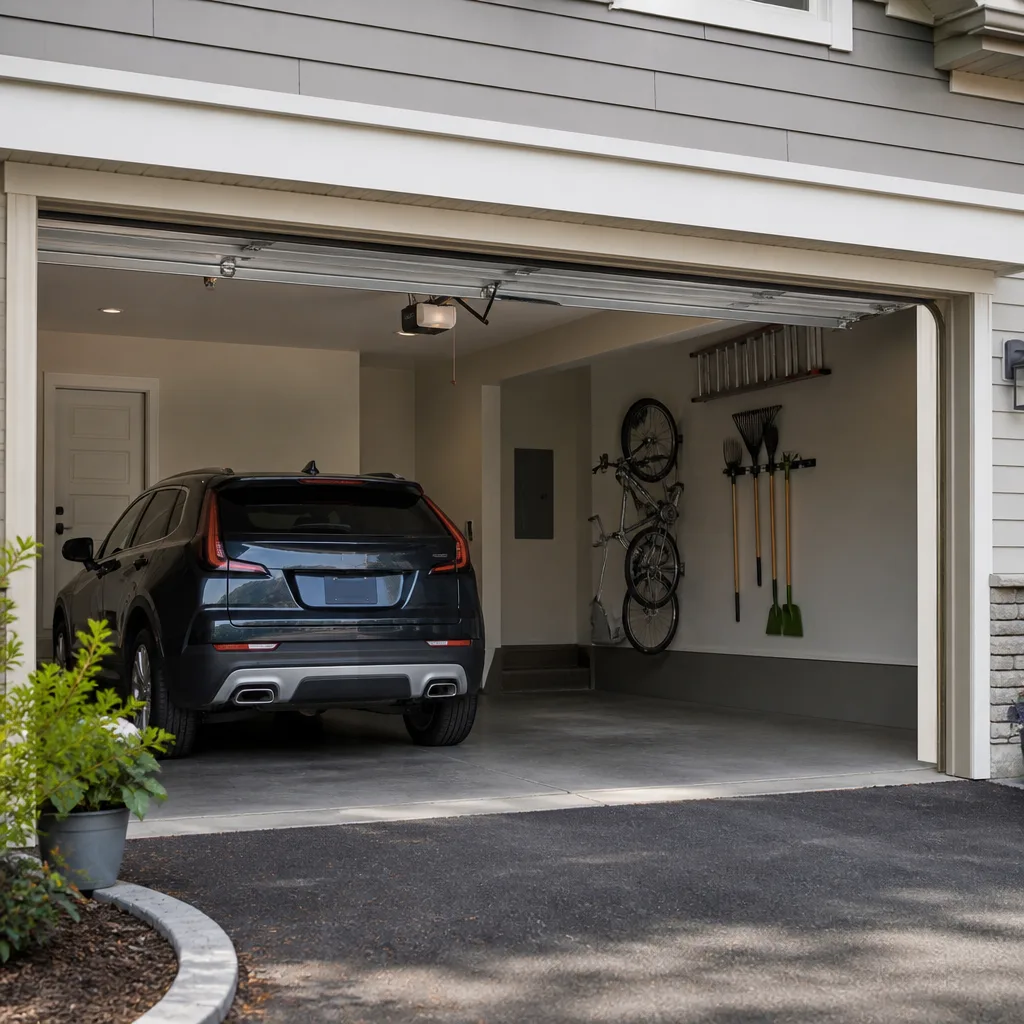 Chamberlain openers
Full 25-point door and opener safety check with every visit - springs, cables, rollers, tracks, and your LiftMaster or Chamberlain opener included
You get a price before we start. It does not change when the truck arrives.
Get your free estimateThe Complete Guide to Garage Doors in Pico Rivera
Most garage door guides read like they were written for a brand-new subdivision in Phoenix: flat lots, wide front garages, standard 16×7 openings. Pico Rivera is not that place. A surprising number of homes here still have the same single-car openings they were built with in the 1950s and 1960s, which means the standard door size everyone quotes you will not fit without a header modification most contractors never mention until you’re already committed. This guide covers the actual decisions Pico Rivera homeowners face: older home construction, converted garages, alley-access lots, and the specific material choices that hold up in the LA basin’s climate. You’ll learn what matters, what doesn’t, and what to ask before anyone touches your garage.
Quick Answer
A complete garage door system in Pico Rivera means matching the door, opener, track type, and spring setup to the specific age and layout of your home. Older single-car openings from the 1950s and 1960s, converted garages, and alley-access lots each create sizing, permitting, and safety-sensor challenges that generic advice skips. This guide from Sherwood Garage Door Repair explains the real options so you can make an informed decision, whether you’re repairing what’s already there or replacing the whole system.
Styles & brands we work with
- Raised-panel steel
- Carriage house
- Modern flush
- Full-view glass
- LiftMaster openers
- Chamberlain openers
Table of Contents
- Why Garage Door Sizing Is Different in Pico Rivera’s Older Homes
- Choosing Door Materials for the LA Basin Climate
- What Converted Garages Mean for Permits and Structure
- How Alley-Access Garages Change Opener and Sensor Placement
- Box-Store Quotes vs. Professional Installation: What’s Actually Included
- Working With the Big Brands: Clopay, LiftMaster, Chamberlain, Genie
- Spring Safety and Why You Don’t Touch High-Tension Cables
- A Simple Maintenance Routine That Actually Works Here
Why Garage Door Sizing Is Different in Pico Rivera’s Older Homes
The stock answer every big-box store gives you assumes one thing: a 16-foot-wide, 7-foot-tall opening built after 1980. Walk through Pico Rivera’s older neighborhoods and that assumption falls apart quickly. Homes built in the 1950s and 1960s here frequently have single-car openings that measure 8 feet wide or 9 feet wide, not the modern 9-foot-by-7-foot or 16-foot-by-7-foot standard. Some were framed with tight header clearance above the opening, which matters because a standard torsion spring setup needs room above the door that older homes don’t always provide.
What this means practically: the door you see on the showroom floor may not slide into your opening without modification. A header modification means reframing the area above the door to create enough structural support and clearance. That’s carpentry work, it’s code-relevant, and it should be part of the conversation before you buy a door, not after. If a contractor quotes you a door without asking about the year your home was built or measuring the actual opening, that’s a red flag.
Here’s what we look at when sizing a door in Pico Rivera:
- Opening width and height: measured at three points, because older framing is not always square.
- Header clearance: the space between the top of the opening and the ceiling or floor joists above. Torsion spring systems need more of it than extension springs.
- Side room: the distance between the opening’s sides and the garage’s interior walls. This determines track type.
- Ceiling type: exposed joists, finished drywall, or a converted ceiling each change how the track mounts.
- Door weight: older solid-wood doors are heavy, which affects spring sizing and opener motor requirements.
Pico Rivera’s older tract homes often have low-slope roofs or flat roof sections, which can mean less ceiling height in the garage than you’d find in newer construction. That changes whether you can run standard radius track or need low-headroom track instead. Low-headroom track costs more and changes how the door sits when open, but it’s often the only option that fits without structural work.
Choosing Door Materials for the LA Basin Climate
Pico Rivera gets real summer heat, with stretches above 90 degrees, and the LA basin’s marine layer in the morning months. That combination matters more than most people think when choosing a garage door material. The sun beats directly on south-facing and west-facing garage doors for hours in the afternoon, which warps some materials, fades others, and tests adhesives over time.
Steel doors are the most common choice here for a reason. They hold up to the sun without sagging, they don’t absorb moisture, and they come in a wide range of insulation values. The trade-off is that steel dents when hit and scratches show. For Pico Rivera homeowners with alley access where a car bumper or a stray ball might connect with the door, a higher-gauge steel panel holds up better than the thin stuff sold at entry-level price points.
Aluminum doors with glass panels have a modern look and they’re light, which reduces wear on springs and openers. But aluminum transfers heat quickly, so a full-glass aluminum door on a west-facing garage will turn the space into an oven in August unless the glass is insulated. They also flex more than steel, which matters on wide single-bay doors.
Wood doors are the classic look and plenty of Pico Rivera’s older homes originally had them. But solid wood is heavy, needs regular refinishing, and reacts to moisture changes. The marine layer isn’t the constant dampness of a coastal town, but it does bring morning humidity that can swell wood panels that aren’t sealed properly. Wood composite and wood-look steel give you the appearance without the maintenance burden.
Here’s a simple breakdown:
- Steel: best all-around for heat, sun, and low maintenance; choose thicker gauge for impact resistance.
- Aluminum: lightest and easy on hardware; needs insulated glass to manage summer heat.
- Wood: beautiful but high-maintenance; humidity swings require diligence with sealing.
- Vinyl or composite overlay on steel: resists dents better than thin steel, holds finish well, mid-range cost.
Whichever material you pick, insulation matters here. An uninsulated metal door turns the garage into a heat sink in July and August, which affects anything stored there and radiates into adjacent rooms if the garage shares a wall with living space. Insulation also deadens noise, which matters when the opener cycles at 6 a.m. and the neighbors are close.
What Converted Garages Mean for Permits and Structure
Pico Rivera has a lot of garages that stopped being garages somewhere along the line. Some were converted into living space, storage rooms, or workshops. Others were partially finished, with drywall up and the garage door still in place but no longer functioning as a vehicle entry. This is common in older neighborhoods, and it creates a specific set of issues when someone wants to put a working door back in or replace a door that’s been sealed shut.
The first thing to understand is that a garage conversion changes the building’s classification in the eyes of the city. If a garage was converted without a permit, which happens, that affects what you’re allowed to do today. Reinstalling a functional garage door may require clearing the unpermitted change first, depending on how Pico Rivera’s building department views the property’s records. We can’t tell you exactly what your property needs without seeing it, but we can tell you this: ask the city’s building department before you order a door. Much better to know the answer before you spend money than after.
Structurally, converted garages often have surprises hiding behind drywall. The original header above the door opening is still there, or it’s been modified to make room for new framing. The original track mounts may be buried. Electrical for an opener may have been removed or rerouted. If someone built a wall in front of the original opening, that wall needs to be evaluated before any door work happens.
Here’s what a proper evaluation covers:
- Permit history check: find out what the city has on file for the property.
- Structural assessment: confirm the header and load path are still intact.
- Opening measurement: verify the rough opening is square and sized correctly.
- Electrical check: confirm there’s a proper circuit available for a new opener.
- Hardware inspection: determine what track, springs, and cables can be reused or must be replaced.
This is not a place to guess. A door that doesn’t fit, or a header that’s been compromised, is a structural problem, not just a garage door problem. Get it looked at by someone who understands both.
How Alley-Access Garages Change Opener and Sensor Placement
Pico Rivera has a significant number of homes with garages accessed from an alley behind the property rather than a driveway in front. This layout existed in some of the original tract developments and persists today. It changes a few practical things about how a garage door system should be set up.
Alley-access garages are often closer to the property line and sit at the back of the lot, which means the garage door faces a narrow drive surface. The photo-eye safety sensors at the base of the door need to be positioned so they aren’t blocked by trash bins, overgrown plants, or uneven pavement. If the alley is tight, the door opens directly into light traffic, which makes sensor reliability more important than on a front garage where you can see the door from the house.
Opener placement also shifts. An alley garage typically has less clearance above the door for the opener rail, especially if the structure was built compact or the roofline slopes toward the back. Jackshaft openers, which mount on the wall beside the door rather than on the ceiling, can be the better choice for these layouts. They free up ceiling space and work well when the door is tall or tracks run close to the ceiling.
Considerations specific to alley-access garages in Pico Rivera:
- Sensor mounting height: fine-tuned to avoid false triggers from alley debris or close fences.
- Opener type: jackshaft vs. ceiling chain-drive, depending on clearance and wall space.
- Keypad placement: positioned so it’s reachable from the alley side when you’re outside the car.
- Lighting: a bright opener light makes a real difference in a dark alley at night.
- Reversing performance: tested carefully on doors that open into constrained space.
Alley garages also sit farther from the house, which means you don’t hear the door if it opens or closes on its own. Smart opener platforms from LiftMaster and Chamberlain with myQ functionality solve that by sending open and close alerts to your phone. That’s genuinely useful when your garage is out of earshot.
Box-Store Quotes vs. Professional Installation: What’s Actually Included
It’s tempting to grab a door from a home center, look at the listed price, and compare it to an installed quote. The numbers look different because they describe different things. A box-store price covers the door panels and tracks in a box. That’s it. You’re paying separately for springs, cables, hinges, weatherstripping, a new opener if you want one, and every hour of labor to install it. A professional installation quote includes all of that: the full parts list, the hardware kit, the labor, haul-away of the old door, and adjustment after the door is hung.
The other difference is that a box store sells you a door in a few standard sizes. If your Pico Rivera home has a non-standard opening, which many older ones do, the standard size won’t fit. You’ll find that out after you’ve paid for it and brought it home. A professional measures first and orders the right size, which for older openings often means a custom-width door that takes time to arrive but fits properly.
Here’s what a full professional installation typically includes:
- Measure and site assessment: before the door is ordered, not after.
- Door and track system: sized to the actual opening and headroom.
- Springs and cables: matched to door weight, not “close enough.”
- Hardware and weatherstripping: hinges, rollers, seals, and stop molding replaced as needed.
- Opener integration: if you’re replacing the opener, installed and synced the same day.
- Old door haul-away: the old panels, track, and hardware are removed from the property.
- Final adjustment and safety check: balance, travel limits, and reversing function tested.
The box-store path can work if you have a standard opening, skills, time, and a second person to help hang the door. Many people do not, and the first time a spring under tension gets involved, the risk curve changes. There’s a reason professional installations cost what they do: the measurer, installer, and person responsible for it working correctly are the same company.
Working With the Big Brands: Clopay, LiftMaster, Chamberlain, Genie
The garage door industry has consolidated into a short list of dominant manufacturers, and your home almost certainly has products from one or two of them already. Clopay is the largest residential door brand in the country, and their doors appear on a huge number of homes in Pico Rivera. LiftMaster, Chamberlain, and Genie divide most of the opener market between them, with Craftsman systems still running in plenty of older garages.
The important thing to understand is that these brands are not interchangeable in every case, but the right technician can work on all of them without pushing you toward a particular one. A LiftMaster opener has different programming sequences, sensor compatibility, and smart-home features than a Genie or a Chamberlain. A Clopay door uses specific track profiles and hardware that are slightly different from an Amarr or Wayne Dalton door. The brand matters for a correct diagnosis, but it should not matter for whether you get honest service.
Sherwood Garage Door Repair’s approach is what we call brand-trained, not brand-locked. Our technicians work on what you already have. If your LiftMaster opener won’t respond to the remote and the diagnostic code points to a logic board issue, we tell you that. If your 20-year-old Chamberlain still works but the gear is stripped and a replacement part exists, we install it. We don’t tell you to buy a whole new system when a specific repair is the right fix.
Three things change when the technician actually knows your brand:
- Faster diagnosis: each brand has known quirks, failure patterns, and diagnostic codes. Familiarity shortens the time from symptom to cause.
- Correct parts: openers and doors are not universal. Using the right manufacturer part means the fix lasts.
- Smart-home integration done right: modern openers from LiftMaster and Chamberlain pair with apps and home systems. A technician who knows the platform sets it up so it works when they leave, not just when they’re holding the phone.
If you’re replacing a door or opener, we give you a brand-agnostic recommendation based on your opening size, your budget, and what’s already installed. If one brand’s hardware integrates more cleanly with what you have, great. If not, we say so.
Spring Safety and Why You Don’t Touch High-Tension Cables
Garage door springs carry the weight of the entire door, and on most doors that’s 100 pounds or more, concentrated in the spring system. Torsion springs, the kind mounted on a shaft above the door, store enough kinetic energy to cause severe injury if they snap or release while someone is working near them. Extension springs, mounted on either side of the door, are no safer when they’re stretched. The cables that connect springs to the door and run through the track are under high tension at all times, even with the door fully open.
This is not a place for DIY repair. If your spring is broken, the door will not lift manually or with an opener because the system’s counterbalance is gone. The correct response is to leave the door where it is, unplug the opener if one is connected, and call a professional. Loading a torsion spring requires winding bars, proper technique, and an understanding of how many turns the spring needs for the door’s weight. Getting it wrong can send a steel bar flying.
What you can safely do:
- Listen: if the door lurches, creaks loudly, or opens unevenly, the springs or cables are failing.
- Look: check for visible gaps in the spring coils or fraying cables, without touching anything under tension.
- Report: tell the technician exactly what you saw and heard. That speeds diagnosis.
Never remove a cable from a track, never loosen spring hardware, and never attempt to adjust tension without the right tools and training. The springs are the one part of this entire system that can send you to an emergency room. If a spring breaks, the whole situation is a same-day garage door repair call, not a weekend project.
A Simple Maintenance Routine That Actually Works Here
Garage doors in Pico Rivera don’t face snow, and they don’t face salt air. What they do face is heat, dust, and the occasional morning marine layer that leaves a fine film of moisture and grime on horizontal surfaces. The maintenance that matters here reflects that reality.
Dust and grit from the LA basin air collect in the tracks and on the rollers. Over time, that grit acts like sandpaper, wearing down roller bearings and causing the door to run noisily and unevenly. Heat dries out the lubricant on the hinges, springs, and opener rail, which increases friction and makes the opener work harder. Morning moisture settles on the door’s exterior and around the bottom seal, and on older steel doors that means surface rust where the paint has chipped.
A practical routine, twice a year:
- Clean the tracks with a dry rag to remove dust and debris. Don’t lubricate the tracks themselves; wet tracks collect more grit.
- Lubricate hinges, rollers, and springs with a silicone or lithium-based garage door lubricant. Avoid heavy grease that traps dust.
- Check the balance: pull the release handle and lift the door manually. It should stay at waist height. If it falls or rises on its own, the springs are wearing.
- Inspect the seal: the rubber strip along the bottom should sit flush against the driveway. A torn or crusty seal lets dust and heat in.
- Test the reversing function: place a roll of paper towels in the door’s path and close it. The door should reverse on contact.
- Tighten hardware: doors vibrate when they cycle. Loose hinge bolts and track brackets show up over time.
This routine takes 20 minutes and catches most problems before they become emergency repairs. If the balance check fails or you see a fraying cable, that’s the moment to call a technician, not the moment to keep using the door.
Common Mistakes to Avoid
- Buying a door without measuring the actual opening. Older Pico Rivera homes often have non-standard sizes. A 16×7 door won’t fit a 15-foot-6-inch opening without modification, and you won’t find that out until delivery day.
- Replacing only one spring. Springs are installed as a matched pair on most doors. If one broke, the other is at the same end of its life. Replacing both resets the system.
- Ignoring a slow or uneven door. A door that hesitates or lifts crooked is telling you something about the springs or cables. Waiting turns a simple fix into a full failure.
- Putting a new opener on a door with old springs. The opener motor works against the spring system. If the springs are weak, the opener burns out faster. Address both together.
- Converting a garage without checking the permit picture first. Unpermitted conversions complicate any future door work. Know what the city has on file before you spend money.
- Mounting safety sensors where bins or bushes block them. Common on alley-access garages. The door won’t close reliably, which frustrates everyone and leads some people to disable the sensors. Don’t.
- Skipping the full-system evaluation. A door is not just panels. Track, springs, cables, opener, and sensors all work as one system. Replacing one part without checking the rest leaves the next failure waiting.
See the difference
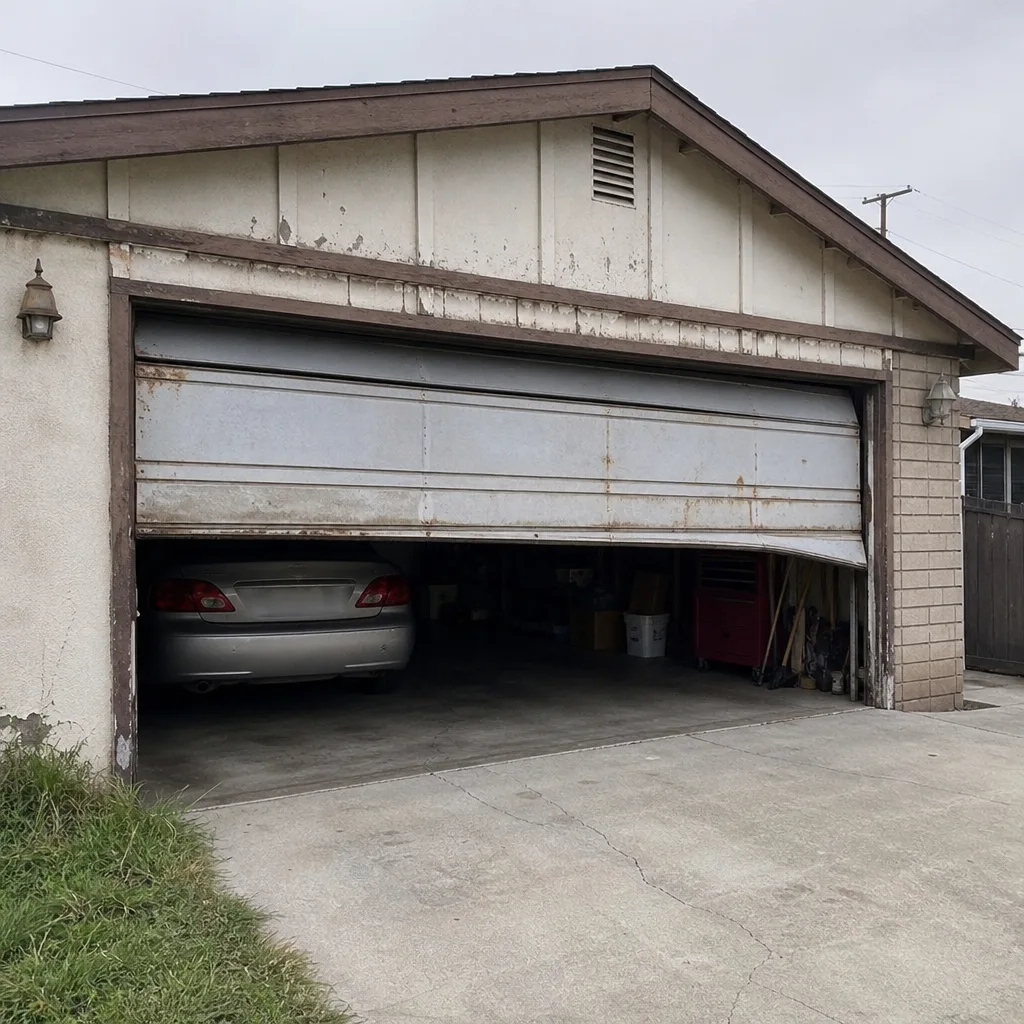 Before
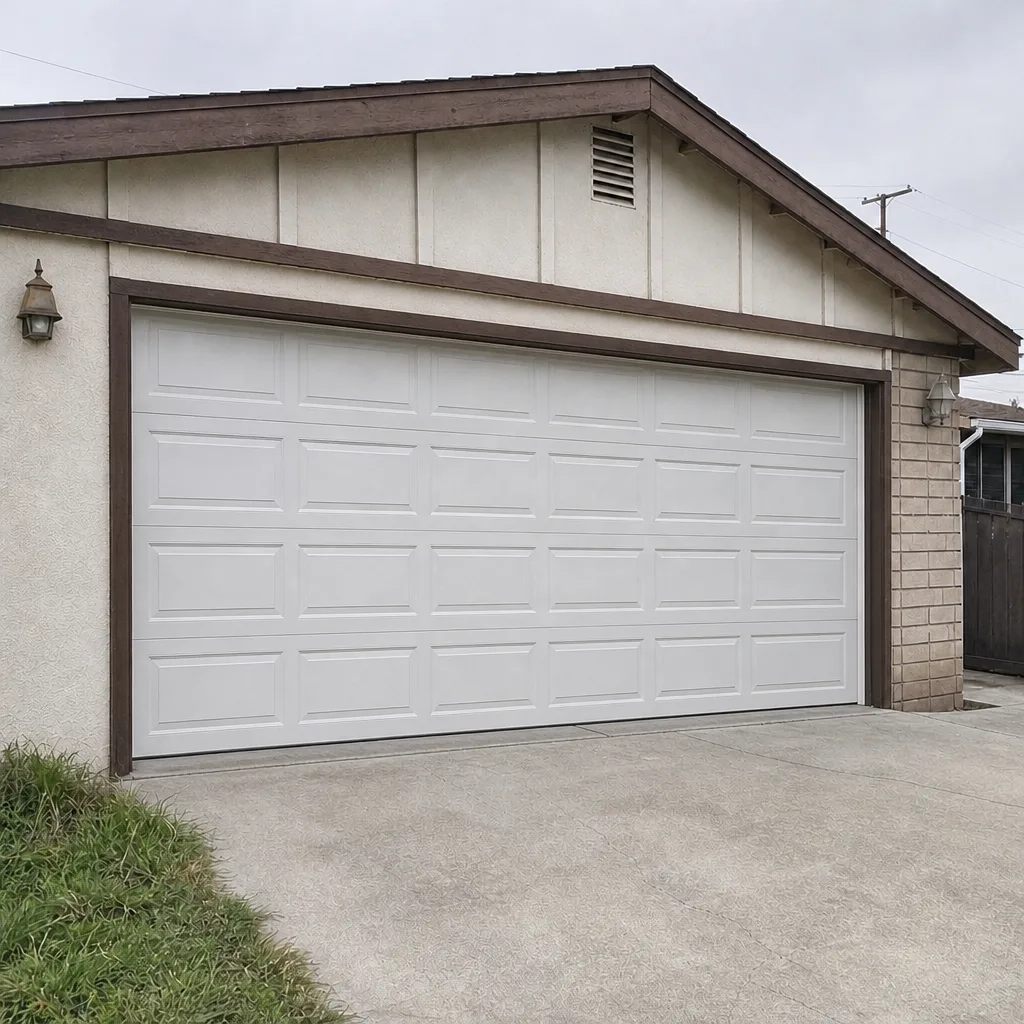 After
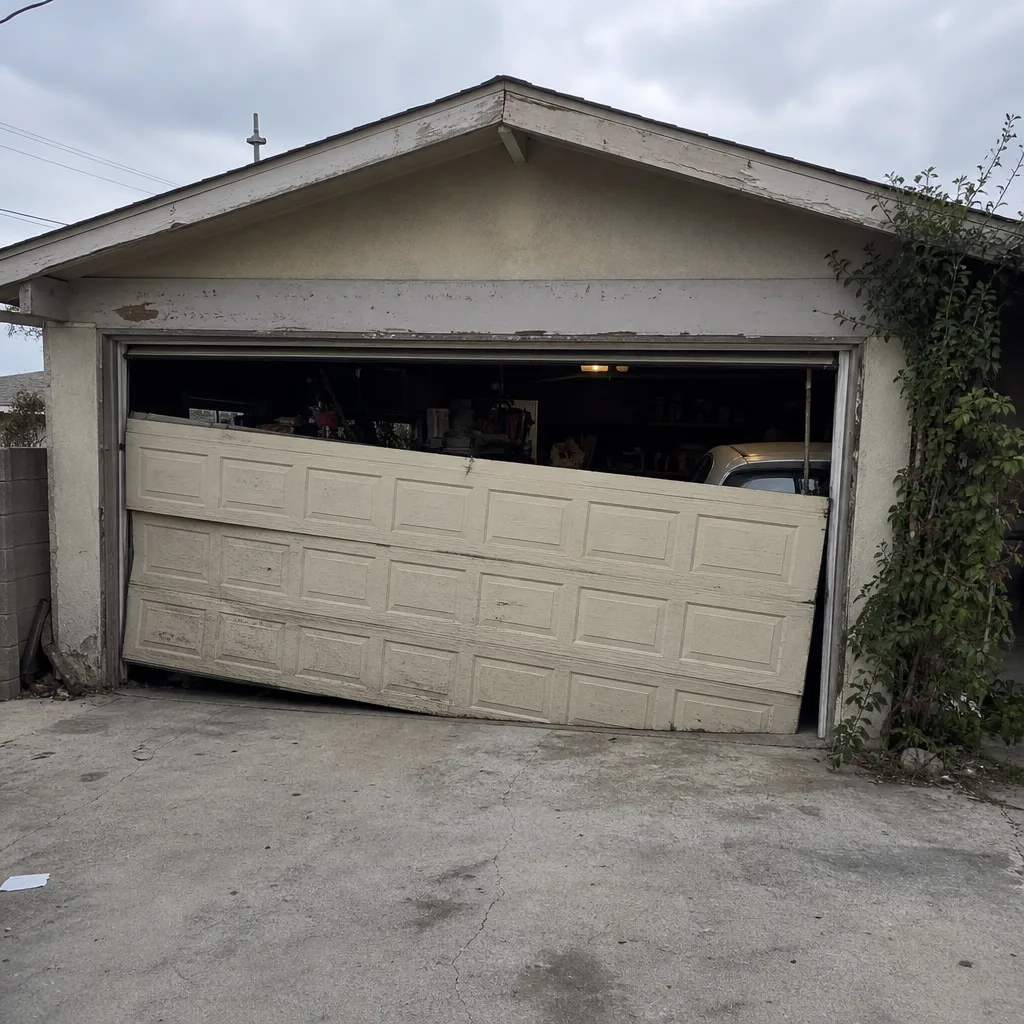 Before
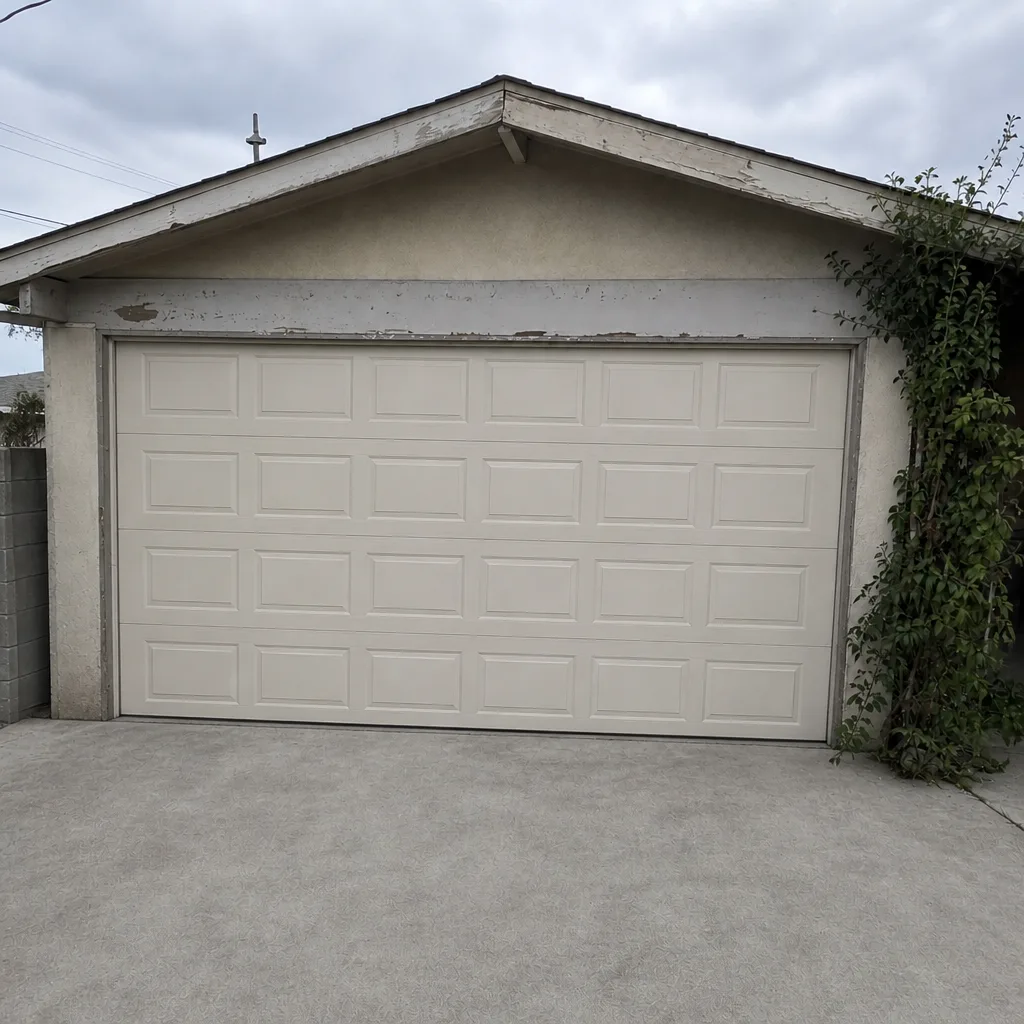 After
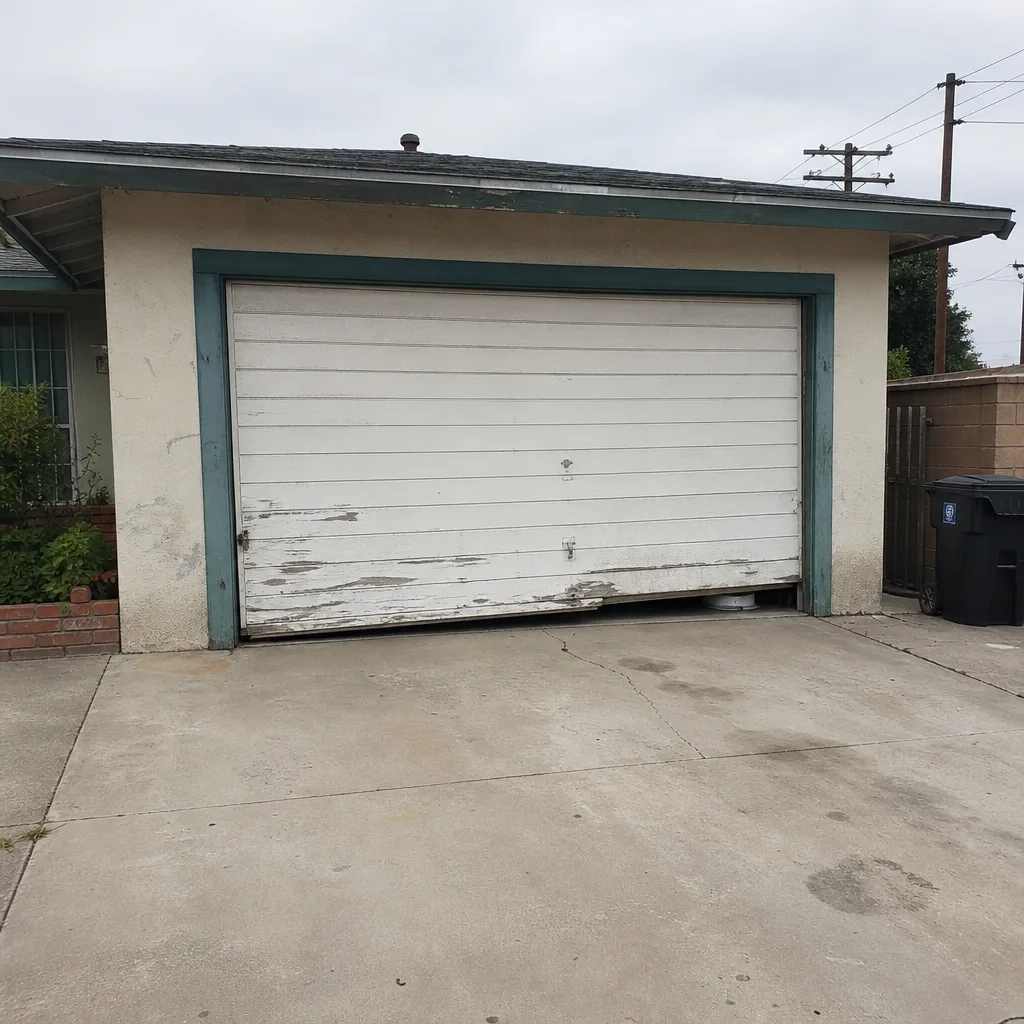 Before
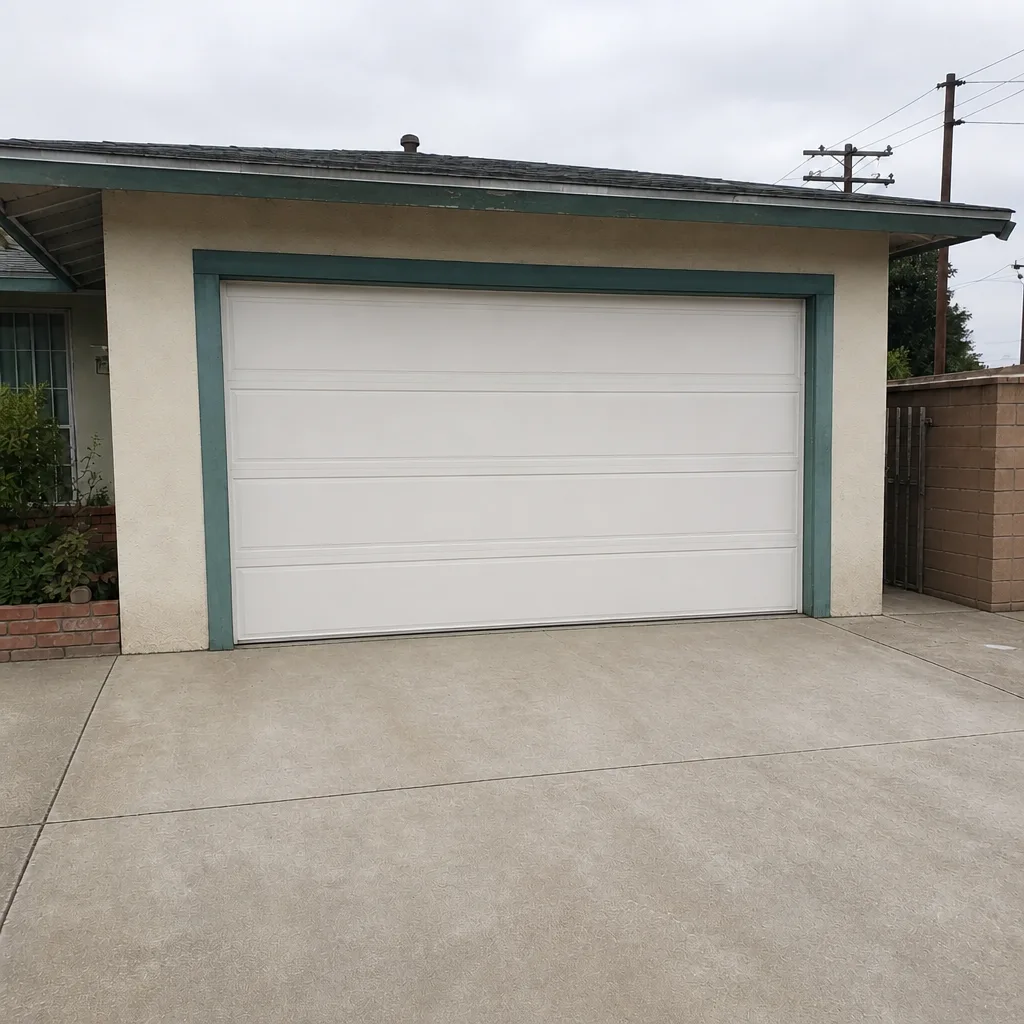 After
When to Call a Professional
You need a professional when a spring breaks, when a cable frays, when the door comes off its track, or when the opener makes sounds that don’t match normal operation. Those are not maintenance items. They’re repair calls, and delaying them makes the damage worse. You also want professional eyes on any situation involving an older home’s non-standard opening, a converted garage, or an alley-access layout, because the wrong assumption can turn a simple replacement into a structural problem. A trained technician sees the whole system at once and identifies the actual fix rather than the first visible symptom. Sherwood Garage Door Repair offers free estimates in Pico Rivera. Call (866) 618-5424. We answer 24/7. Fast dispatch from 7am to 7pm, Sunday through Friday.
Frequently Asked Questions
A new garage door in Pico Rivera typically ranges from a few hundred dollars for a basic single-width steel door to several thousand for a large, insulated, custom-size door with installation included. The final number depends on the actual opening size, material, insulation, track type, and whether the opener is replaced at the same time. Older homes with non-standard openings often pay more because the door must be custom-ordered and additional framing work may be needed. Call (866) 618-5424 for a free, written estimate.
Yes, same-day repair is available for most broken-spring, cable, and track issues. Sherwood Garage Door Repair’s crews dispatch from 7am to 7pm, Sunday through Friday, and carry common springs and hardware on the truck. If a specific part is not on hand, we’ll tell you exactly what’s needed and when it can be installed.
Start by checking with Pico Rivera’s building department about the property’s permit history. A conversion that was done without permits can affect what you’re allowed to do now. Once the permit picture is clear, a structural assessment confirms the header and opening are intact. Only then should a door be ordered and installed.
It changes a few things. Safety sensors need to be mounted clear of bins and close fences. Opener type depends on ceiling clearance, which is often tighter over alley garages. And smart opener alerts become more useful, because you can’t hear the door from inside the house. A technician familiar with Pico Rivera’s alley-access lots accounts for all of this during the measure.
The written estimate is the price you agree to, and the work doesn’t start until you’ve approved it. If a hidden structural issue is found during the job, we stop, explain what we found, and get your approval before doing anything that changes the cost. No surprise invoices.
Almost certainly yes. Sherwood Garage Door Repair works on LiftMaster, Chamberlain, Genie, Clopay, Amarr, Wayne Dalton, Craftsman, and Raynor systems. We diagnose what’s already in your garage rather than steering you toward a brand we’d prefer to sell.
The Bottom Line
Your garage door system is exactly that: a system. Panels, springs, tracks, cables, opener, and sensors all affect each other, and in Pico Rivera the home itself affects all of them. Older openings, converted garages, alley access, and the basin’s heat each play a role in what works and what doesn’t. The right approach is to measure first, diagnose before replacing, and match the door, opener, and hardware to the specific house rather than to a showroom display. Whether you need a repair this week or want to plan a full replacement, call Sherwood Garage Door Repair at (866) 618-5424. We answer 24/7. Fast dispatch from 7am to 7pm, Sunday through Friday.
Written by the team at Sherwood Garage Door Repair, serving Pico Rivera since 2011.